

Podcast Episode
In this episode of The World Unpacked, Katrina tells host Jon Bateman about the creation of America’s AI war machine, the rise of Palantir, and the fully autonomous weapons already being tested.
Jon Bateman, Katrina Manson
Ali Wyne joins Jon Bateman on The World Unpacked to explain why Beijing hasn’t saved Iran; what Washington’s bipartisan “consensus” on China still misses; and how Trump should negotiate when he finally sits down with Xi Jinping.
Invalid video URL
President Trump was meant to fly to Beijing this week for major trade talks, but instead he’s staying home to manage the Iran War. It’s an apt metaphor for America’s decades-long failure to refocus on Asia and reckon with China’s rise. Does Trump have a plan for dealing with America’s top rival? If so, what is it?
Ali Wyne is a perceptive analyst of U.S.-China competition and author of America’s Great Power Opportunity. He joined Jon Bateman on The World Unpacked to explain why Beijing hasn’t saved Iran; what Washington’s bipartisan “consensus” on China still misses; and how Trump should negotiate when he finally sits down with Xi Jinping.
Note: this is an AI-generated transcript and may contain errors
Jon Bateman: I'm Jon Bateman, and this is The World Unpacked. Ali Wyne, welcome to the world unpacked.
Ali Wyne: Thanks very much for having me.
Jon Bateman: We are recording this on the advent of what would have been a huge bilateral summit between President Trump and the Chinese leader Xi Jinping. This one has just been postponed because Trump would rather focus on the Iran War. And so instead of going to Beijing and negotiating with Xi Jinping about trade, fentanyl, and all these other sorts of issues, he is now using what political capital he has to try to get China to send warships to the Strait of Hormuz and clean up the Iran mess. What does all of this tell you about the place that China has in the minds of US leaders? Are we doomed to distraction? Bye.
Ali Wyne: So a few thoughts. It does seem like we're doomed to distraction. When you use the word distraction to remind you, so when Lee Kuan Yew is alive, the founding father of Singapore, he famously said that American policymakers tend to think that Asia is like a movie, that when Americans get distracted by crises outside of Asia, they press pause on the movie, they attend to their distractions, and then when they come back... They pressed play and they think that Asia will just pick up where the Americans left off. And he said, well, whether or not you're engaged in the region, the region is going to evolve. It was the George W. Bush administration prior to 9-11 was thinking very seriously about a fundamental reorientation of U.S. Foreign policy towards Asia, then 9- 11 happens. And successive administrations, Republican and Democratic alike now for a quarter century have found themselves unable and or unwilling to extricate, meaningfully shift the direction of U.S. Foreign policy. Towards Asia, even though there is a broad recognition that when you think about what is the nerve center of the international system, it is now and increasingly will be Asia. So maybe condemned to distraction is too strong, but do we have a predilection for distraction? So we should talk about why
Jon Bateman: that is, and also, if Trump, he has three years left in office, can he break that cycle and in what form, for what purpose? But I was thinking about this this morning, and let me just provoke you with a hypothesis and see if you agree with it or not. The best possible outcome for the U.S. In Iran is regime change with a full democratic transition, the worst possible outcome in Iran. Is Iran somehow radicalizes further and even gets a nuclear weapon. Neither of those extreme outcomes will be as significant for US history as what happens with the US-China relationship and the balance of power between our two countries over the coming years.
Ali Wyne: Do you agree with that? There's a discrepancy between the rhetorical emphasis that we rightly place on the Asia Pacific or the Indo-Pacific. We say that Asia is now and will increasingly be the linchpin of the international system. We say our relationship with China is the most consequential bilateral relationship in the world. And yet, for all of that enduring rhetorically emphasis, the policy lags, the attention lags. The bandwidth lags and now, just in concrete military terms, look... As we speak, as you and I are recording this podcast, what are we doing, we in the United States? We're drawing down parts of the THAAD system in South Korea. We're relocating parts of THAAAAD to the Middle East. This is a theater air defense system. Theater air defense. We now have a Marine Expeditionary Unit that had been based in Okinawa that now is on its way from Japan. It's now on its to the middle East. Exacerbating the anxieties of two top allies in Asia that contrary to our reassurances, Maybe China's maybe China's not. The principal focus of our policy, and maybe Asia, despite our reassurances, is not our principal theater of focus.
Jon Bateman: And D.C. Is a very China-focused city generally. So usually, when something interesting or important or big happens in the world, people race to explain the China implications of it. And so after the Iran War broke out, people were racing to argue that either this was a great coup for the U.S. Over China because we were showing them who's boss and we are eliminating one of their allies in the region. Or that this is a disaster for us vis-a-vis China because of the distraction, some of the military issues he described. Interestingly, the US administration, the Trump administration, they have not described anything that they're doing in Iran in terms of China. They've not sought to make that connection or say that this part of a larger, great power competition strategy, which is what you might've expected from previous presidents.
Ali Wyne: What do you make of that? If you look at some of the actions that he's taken since retaking office, strikes against alleged drug vessels in the Caribbean, ousting Maduro, bombing Iran's nuclear facilities, I suspect that he took those actions because he felt that he could and because the targets of his actions were weak and didn't have a retaliatory capacity. Some of his proponents, I think, try to craft a narrative that says that these successive actions are part of a longer-term containment campaign whereby the United States is depriving China of Ki. Allies region by region. And so even if the president is outwardly conciliatory towards President Xi, he's patiently, deliberately crafting and orchestrating a containment strategy. So there's a discrepancy between, I suspect, what the president himself is doing. The president, importantly, he proceeds on the basis of whim, impulse, instinct. So I think A, we should be wary of narratives that try to project a certain coherence onto what he's doing. Also, from China's perspective, we hear a lot of these notions. An alliance of autocracies, an axis of autocracy, and one of the questions that's been ubiquitous since Operation Epic Fury was launched at the end of last, since the United States launched it at the of last month, why hasn't China rescued Iran? Why hasn't done more to save Iran? And the upshot is that if this alleged alliance of autocracies is so strong, China, Russia, Iran, North Korea, that presumably, China would be doing everything possible to rescue Iran, the reality is that because of China's history, its recent history actually in particular, The Sino-Soviet split during the Cold War that nearly led Beijing and Moscow to the brink of war in 1969, that episode really seared itself into the minds of Chinese leaders. And so now Chinese leaders, they believe that non-alliance relationships confer more freedom of geopolitical maneuver. So they prize flexibility. And so if you look at China's relationships in the Middle East and also beyond, what really stands out is it's a diversified portfolio of transactional relationships. So, in the Middle East, sure, China enjoys a number of important... Ties with Iran, it's also concurrently strengthening ties with the Gulf countries. And so when people say, why isn't China doing more, I think the question, to my mind, that question, it reflects a real cardinal analytical fallacy of mirror imaging. The question reflects an assumption that China would and or should comport its foreign policy and shape its external alignments in the way that the United States should underwood.
Jon Bateman: The Iran War is an interesting mirror to hold up to those two distinct approaches. One might say that the U.S. Is in this war only because of this structure of alliances and partnerships, that essentially, like many of the wars that we fought in the Middle East, we are protecting a set of regional interests, a security architecture, that principally is for the benefit of Gulf countries, Israel, Turkey, others, Um, and secondarily is for direct U.S. Interests. And so one might say that the Middle East is an arena in which China's more pragmatic approach and a lack of traditional treaty alliances with, you know, in which they would need to go and defend partners is actually keeping it out of some of the messes that we're falling into.
Ali Wyne: I remember, I think it was maybe around 2010, 2011, I could be getting the date wrong, but Steve Clemens, I don't know if he still runs the Washington Note, but he ran the Washington Note at the time, and he related a conversation that he had with a Chinese foreign ministry official. And he asked this foreign ministry official, what is China's grand strategy in the world vis-a-vis the United States? And the official said to him, half jokingly, but I would say it wasn't so much half jokingly and half seriously. I think was probably 80 to 90% seriously. This official said to Steve Part of our grand studies, we hope that the United States remains bogged down in endless conflicts in the Middle East. The United States will intervene and or invade, and then once the dust settles, China says there are now economic opportunities. We've seen that pattern. What we're seeing right now, even right now in real time with Iran and China, Iran is negotiating with a number of countries to say, we'll allow safe passage of your naval vessels through the Strait of Hormuz if cargo transactions are denominated in China's currency. And so, despite the narrative that we hear that... I mean, China certainly relies on energy exports from Iran, but China is actually not as vulnerable to disruptions to traffic through the straight-forward moves as you might expect. They spent last year building up their crude oil reserves. They continue to ramp up clean energy investments, so I think that they've protected themselves. Yeah.
Jon Bateman: Protected themselves to a degree. Your point about how each country has spent their time over the last 25 years, I think, is an important one. When I worked in the Pentagon, that was time during which we built a military for these low intensity conflicts in the Middle East. We expended the resources that we were building, drawing down our readiness, our capacity, like we're seeing today in Iran. Sure. You know, precision munitions that are not easily replaced. Meanwhile, during that whole time, China didn't face those obligations. So it was able to invest militarily in a restructuring and buildup of its military toward future wars, including a potential conflict in Taiwan. I wonder how broadly you see the shifting balance of power between the U.S. And China. When I say balance of power, I'm not just meaning militarily. Overall influence, security, strength, if you look back at the last few years and you look ahead at the trajectory that we're on, which country seems to be rising or falling in this contest?
Ali Wyne: So a few years ago, this narrative of peak China had taken hold, and I'll just sort of explain it briefly. The idea was that China, on account of a number of significant and intensifying structural weaknesses, slowing growth, demographic decline, distressing the real estate sector, and that list we could easily enumerate. But the idea was, that because China was having a difficult time sort of dealing with moving past those structural difficulties, that perhaps China's overall power either had peaked or would soon peak. And therefore, the concern for many US policymakers and commentators was, would we have to deal with a systemically declining China that would lash out?
Jon Bateman: I just want to pause here for a moment because I think people outside of the foreign policy bubble might actually be surprised to hear this idea. I think in the wider culture, for most of our lives, the notion of a rising China has been the key framing device to understand a changing world. And now China, whether Americans are realizing this or not, is facing a series of significant obstacles. Its population has actually begun to decline. Could be going on a kind of demographic spiral, the likes of which we've seen in Japan and South Korea that have severe consequences for those countries. Its economy is in a very dysfunctional state and has been for a couple years now, having to do with some of the speculative over-investments and government mismanagement of a kind of state-planned capitalism. And so there are now serious people, this is your point, who have made the case that China is actually on the way down, and that's gonna create a problem because a country on the down becomes more violent and chaotic. So pick up the story from there.
Ali Wyne: Sure. I'll come back to that point in a second, but just to say that the reverse now sort of holds. That is to say, it is increasingly Chinese officials, and they view the war in Iran as an example, it's now Chinese officials who increasingly think that the United States perhaps is lashing out in decline. The feeling is that Beijing will have to contend with the systemically declining Washington. But to the point that you made, one of concerns that I have about the discourse around China is I find that it veers unhelpfully between equally misguided extremes or caricatures. So there's a tendency we oscillate between undue diminution of China's competitive potential whereby we overweight China's competative liabilities and then undue aggrandizement whereby we overweight its competitive strengths. And the more sort of mundane assessment, somewhere in the middle, I think is more accurate. When you look at China, I mean, China is, it's a country of 1.4 billion people, and intuition, it stands to reason that any country of those proportions is going to contain an infinite number of contradictions. And so for each category of power, military, economic, diplomatic, contradictions in here. So take the military, for example. You can simultaneously say, without any fear of being mistaken, you can simultaneously, say, that there is extraordinary turbulence within the top ranks of the People's Liberation Army, so much so that according to actually just the newly released intelligence assessment, that China is unlikely to have the operational capacity to execute a successful invasion of Taiwan by 2027.
Jon Bateman: Because Xi Jinping has been purging so many members of the top military leadership, supposedly on grounds of corruption.
Ali Wyne: Supposedly on grounds of corruption. So there's extraordinary turbulence within the top brass of the PLA. And I suspect it's going to take a long time for Xi Jinping to reconstitute a military that he believes is sufficiently transparent, free of corruption, operationally ready. And you can say in the same breath that China's military modernization proceeds apace. Now there are a lot of individuals who do war gaming exercises who say, if God forbid the United States and China were to go to war over Taiwan, it's not clear who would win. In the military domain. Can I just press you on that?
Jon Bateman: For a second, I'll grant that there's contradictions. I think there's contradiction in the US too, right? On the one hand, the US is kind of becoming a bit of a basket case. We've got this political system that is breaking down before the eyes of the world. We're lashing out, we're chaotic, we're untrustworthy, countries are trying to hedge. On the other hand, a lot of people are really afraid of us and we're actually displaying our power. More impressively than ever before. So we've got our own contradiction. What I want to press you on is this question of the balance of power. Most observers, I think, believe that the military balance of powers has been gradually shifting toward China over time. Do you agree with that? And what do you think about the rest of it? Which country's economic trajectory would you rather have? Which country do you think is going to be in a better position in 50 years than it is today vis-a-vis the other.
Ali Wyne: Well, I hesitate to make a prediction about what's going to happen tomorrow, let alone 50 years from now. I'm going to make you. But here's what I... But what I will say is this. I do think that the country that is going to be best positioned to compete over the long haul is a country that attends most effectively to its internal socioeconomic challenges. I'm always wary of sort of adapting lessons from the Cold War, but one of the main insights from Kennan in the famous Long Calligram was... That America's external competitiveness vis-a-vis the Soviet Union, it doesn't just run in parallel with its internal health, it's predicated upon America's internal health.
Jon Bateman: This long telegram was a kind of key intellectual document of the Cold War by one of our most senior diplomats, kind of framing the Cold war.
Ali Wyne: He made the point that if the United States were to compete effectively and sustainably with the Soviet Union, it had to ensure that it was strengthening the power of its domestic example. China has internal challenges. We have internal challenges in the United States. That competition, I think, is sort of the jury is out. I would say that the the overall balance of power, certainly... Certainly I think is shifting in China's favor. China is investing significantly in and subsidizing investments in critical and emerging technologies. And so there are many categories of critical and emergent technology in which China is either a world leader or maybe even the world leader. You look at clean energy, for example, China is far and away the leader. So then in the diplomatic space, China has engendered a lot of distrust with the way that it's carried on in its neighborhood and further field. What I worry about right now though, is that the United States is acting very coercively and very unpredictably. China also acts very coercively, but I think that there's a little bit more predictability in the way that it comports itself. And so what I worry about right now, one of the refrains that I hear a lot when I talk to friends of mine who work in Europe, in Asia, they say, Ali, our apprehensions about China haven't subsided. And in some cases, those apprehensions are continuing. They increasingly coexist, however, with apprehensions about the direction of US foreign policy. And so, what we hear a a lot about now is, We're not just de-risking from China, we also have to de-risk from the United States. So how could you do both? That was kind of my question. This is.
Jon Bateman: This is an increasing meme in foreign policy. Prime Minister Carney's speech. Yeah, so the Canadian leader who gave this very widely reported speech in which he said, the US is no longer a kind of trustworthy and legitimate world leader. Maybe it never was. And that was kind of his point. And so now we so-called middle powers, right? Europe, Australia, Japan. The rest of the kind of democratic US-aligned world can no longer just plan on Uncle Sam being that benevolent protector and leader and being aligned with them. Instead, we must go our own way. Now, everyone loves this. Everyone is like applauding Carney because there's some catharsis in it, frankly. I think people are excited to see Trump kind of get some diplomatic comeuppance and maybe there's a desire to almost have blowback occur, right? It feels like to many, that's the natural order of things and this will get things back on track. But I have to say, I have no idea what this actually looks like. Do you? I mean, you just said, like, countries want to simultaneously de-risk from the U.S. And China. Those are the two global superpowers. Those are two biggest economies. Wait, what does that actually look like?
Ali Wyne: In the short run, however you, whatever your time horizon is for the short-run, there are no middle powers that really have the option of saying we are going to disengage from either one of these giants. Whether you are a middle power, a smaller power, whatever sort of adjective you want to insert in front of it. If your name is not the United States or China, you are going have to find a way to deal concurrently with both of those countries. Having said so, over the medium to long run, it's hard for me to believe. Those efforts on the part of, it's not just Canada, Australia, India, but we can go on and on, that those efforts over the next 20, 30, 40 years, 50 years, will not do something to reduce America's long-term influence. There are concerted efforts to circumvent the US dollar. There are concerned efforts to reduce dependence on the United States in a whole host of ways. So in the short-term difficulty...
Jon Bateman: I think in some ways what you're describing or predicting is the rise of a new third world, right? I mean, nowadays when Americans hear the term third world they associate that with the undeveloped world, the poor countries. But the original meaning of that term was during the Cold War we have the US sphere of influence, the Soviet sphere of influence, and then lots of countries that tried to be in this non-aligned space. I think what I'm hearing from you is that in the future, more countries will be looking and they'll see a powerful and somewhat exploitative China. They'll see predatory and unpredictable the United States.
Ali Wyne: It's really well said, yeah.
Jon Bateman: And they won't want to be in either sphere. And so maybe the hope is they can create a distinct third world. What I would just offer though is the alternative that the U.S. And China actually succeed in bullying and dominating their respective spheres of influence. Points. And a genuine third world never emerges. Instead, countries that used to have a more simpatico relationship with their sponsor, right, just have a much more tense, transactional, unpredictable relationship, and it's just a harsher world.
Ali Wyne: There was a term that you use that I want to pick up on, use the term non-alignment. So one of the terms du jour, it's not so much non- alignment, it's multi-aliment. So this is one of sort of the favorite concepts of the Indian external affairs minister, Jayashankar. And I remember the first time he said, India is pursuing a strategy or a diplomatic posture of multi- alignment. I remember my initial reaction was, oh, multi- alignment is just a difference in prefix, multi-alam and non-alam, but he used that word again and again and I said, There must be a reason. And I think that now in retrospect, the reason for that prefix change is obvious. Multi-alignment, more so than non-aliment, it implies a greater sense of agency. It's that, yes, we recognize that the United States is a major power, China's a major powerful, that the two of them are dominant powers. But A, not only do we not have to make a so-called choice between the United Sates or China, we'll align with Washington and Beijing selectively depending on circumstances. But we're not gonna limit ourselves to the United States and China. There's a whole other world out there. So multi-alignment, whether you look at what China's doing, what India's doing what a growing number of countries are doing is, how do we maximize our freedom of geopolitical maneuver? So I think that the trend is that the salience of ironclad alliances is likely to diminish. The salience of transactional alignments is likely increase because countries believe that in this chaotic, we're in this, what is that expression? I'm I think the Gramsci quotes something like, we're in between, and the old order, the old order has died, the new order has yet to be born, and something, we are in a time of monsters. I think that a lot of countries feel that in this chaotic, turbulent, uncertain world, that their best sort of bet for safeguarding their national interests, diversify, maximize diplomatic portfolio maximizing.
Jon Bateman: Freedom of maneuver my respectful pushback not necessarily to you but to those countries sure is it's a great slogan yes and part of the job of leaders like Carney or the foreign minister of India or others is to develop creative and fresh rhetoric to project the image that they have a solution to these problems and I somewhat doubt it but we will find out in 50 years. I would say, Ali, I fully plan to be alive in 50 years. I fully planned to be hosting this podcast in 50 years, and I fully plan to have you back to test me and I'll test you. I'm looking forward to it. We've been talking a lot for a while now about the kind of great game in which the US and China are competing for influence or connectivity with the rest of the world. I'd like to talk more about the bilateral relationship. Between the U.S. And China, what Trump sometimes calls the G2.
Ali Wyne: The G2, right?
Jon Bateman: Right, which is a fascinating phrase. People may know there's the G7, which is the group of seven most powerful, wealthy democracies. They get together and chat about global affairs. There's the g20, the group 20 biggest economies. They get to together and chit chat. And so Trump has embraced this notion of a G2, essentially saying, the US and China are the big boys, and we're going to get together and settle things for the rest of the world. Maybe you could just give us a potted history of the last 10 years of US-China policy. What has changed during the Trump era? What are you seeing change now? What have been the major muscle movements or shifts?
Ali Wyne: One of the most dramatic and I think counterintuitive developments of the past decade is, in US-China relations is, it was the first Trump administration that introduced what's commonly known as the consensus, the US consensus on China policy. And I've long been skeptical of that notion for reasons that I can explain. It's now the second Trump administration, that is unwinding that alleged consensus. So just in terms of- Yeah. What is this consensus? I suppose it can.
Jon Bateman: Consensus that arose around the time of the first Trump administration.
Ali Wyne: So the Trump administration comes in, just backing up a little bit before. Successive administrations, Republican and Democratic alike, from the Nixon administration to the Obama administration, the through line, the basic through line of the policy was that we want to, it was called, engage but hedge when it comes to China. The idea was when President Nixon and his Secretary of State and National Security Advisor Henry Kissinger, when they pursued the U.S. Opening to China, so China in the early 1970s, very poor, very isolated, enthralled to revolutionary sort of Maoist fervor. And the Nixonian bet was... It would be unwise for not only the stability of Asia, but also the stability of the world if a country of China's proportions, roughly 800 million people at a time, 800 million living in poverty, isolation, enthralled or revolutionary forever, it would be bad for stability in Asia and beyond to essentially just leave China alone. We need to do more to bring China, hence engage. We want to bring-
Jon Bateman: The famous opening of China that Nixon achieved.
Ali Wyne: The opening to China, bring China, integrate it, engage with China, bring it into the post-war economic order, the hedge part. The hedge part was that because China, ideologically and otherwise, is so different than the United States, in order to hedge our bets, as we pursue this opening to China and integrate it into this international economic order. We should simultaneously strengthen our relationships with China's neighbors, Japan, South Korea. So an engagement, engage and hedge was essentially the foundation, a bipartisan foundation. For U.S.-China policy through the Obama administration. The Trump administration comes in and famously, in its national security strategy issued in December 2017, declares America's erstwhile China policy as a failure. And the document and then the January 2018 national defense strategy corroborates that assessment. But these documents say that Republican and Democratic predecessors of President Trump, they foolishly assumed, hoped and or assumed that by bringing China more into the fold, that we would induce political liberalization in China, that would temper some of its revisionist tendencies, and what we instead have done, one administration after another, we've essentially enabled the resurgence of what is now our great adversary. And importantly, it depicted China not as kind of a complex competitor, but it is an adversary. And they say that China is, so that the United States has enabled the resurgence of now its greatest adversary, and that this adversary... It is a highly ideological adversary. It believes that the West is in terminal decline, that the East is inexorably resurgent, and that this competition is zero sum. There will be a winner, there will be loser. So it frames China very differently. It frames the terms of competition very differently, and it says that we have to compete accordingly. The reason I say, the reason that I say that there was an alleged consensus, there are a few reasons. I think that even now, there is something approaching maybe a bipartisan diagnostic consensus to say that America's foremost strategic competitor is China. But once you get past that diagnostic, is there a consensus on... So once we go from descriptive to prescriptive, is very consensus on policy questions? How do we avoid war over Taiwan? How do recalibrate our economic relationship? What are we ultimately trying to accomplish in the relationship? There's nothing at all approaching a consensus. The President, my sense is that... When he sits across the table from President Xi, as I imagine he'll be doing soon enough, despite the delay of their long-awaited summit, when he sits across from President, Xi, I don't think that he sees an imperial autocrat enthralled to Marxist Leninist fervor. I think he sees kind of a business rival, an impressive business rival with whom we can do business. And he doesn't think about strategic competition in sweeping existential terms, but in much more narrow practical terms. So President Trump, not only within his own administration in 1.0 and now in 2.0 But also within the beltway, he's an iconoclast, but obviously the most powerful iconoclast.
Jon Bateman: Let me try this out on you, because I think that was an excellent history. My description of the consensus, if I could say so, and who's to say whether it's a consensus or not, is the American foreign policy elite, maybe the American elite more broadly, have come to see China as so malicious across such a wide range of fronts, whether it the outsourcing of our jobs, unfair trade practices, IP theft. Threatening Taiwan, human rights violations, AI tools, that the problem is no longer China's behavior. We need to shift from managing these sections of China's behavior to now the problem has become China itself, that China is just a malicious actor. And therefore, the solution is to weaken China's power. Almost wherever and however we can, subject to certain limits like we don't want to cut off our nose to spite our faces. And so then that's the prescription. We can and contain China as much as we can without paying prices ourselves. And so for example, if you're a senior U.S. National security official and you wake up in the morning and you open the Wall Street Journal and it says China's GDP went down this quarter. You're happy! And if it says a Chinese boat just sunk, or there's an earthquake in China, you're happy. But if China is growing its economy, if China's innovating, even almost like curing cancer, you're kind of sad. That's my sense of the consensus. And then I agree with you that Trump is just outside of that, right? He does not think that way, I think. I think he... Basically is monomaniacally focused on a couple things that he cares most about. Above all, the trade deficit. So do you agree with that description of kind of the quote unquote consensus and of
Ali Wyne: What you describe, I think very accurately, I would say it's a consensus of maybe sentiment. I think that the fundamental competitive challenge that China poses to the United States, it isn't military, economic, technological, or diplomatic, it's psychological. 30 or 35 years ago, after all, the thinking was that China was on the wrong side of history. The Soviet Union has collapsed, China, which had been seen as kind of an appendage of the Soviet Union, there was a real sense that with the implosion of the soviet Union. That the United States and its democratic allies and partners had dealt a decisive blow to all of the various isms, fascism, totalitarianism, etc. And so China was allegedly on the wrong side of history. When the country that you believed was on the wrong side if history only 30 or 35 years ago that proclaims an antithetical conception of exceptionalism is now your principal strategic competitor, it's very jarring to reconcile where you had hoped and or assumed China would be with where it is now. And I think that it's those efforts at reconciliation that produce those wild caricatures that I mentioned earlier. So one attempt at reconciliation is, don't worry, China will eventually collapse. It's given us a little bit more for run for our money, but it'll eventually collapse, the other attempt at Reconciliation is to throw your hands up despairingly and say, where did America go wrong? Do we need to out China China? And I that neither one of those caricatures is helpful. The first narrative that says China will eventually collapse reads complacency. The narrative that say, or the thinking that says, where did America go wrong? China's 10 feet tall, it breeds consternation. How can the United States find a midway point, psychologically, temperamentally, between complacency and consternations, and how can it focus in the main, not on trying to out-China China, not on try to contain China, but on becoming a better version of itself? America has certain competitive advantages that China cannot readily replicate, and the converse also holds. And so, I would no more exhort. China to try to out America America then I would exhort America to try out China China.
Jon Bateman: So, let me be provocative once again. Is that precisely what Trump is doing? Because Trump's narrative of his political project is he is bringing the United States into a golden era, right? We're the hottest country in the world. And then on the foreign policy front vis-a-vis China, he actually, I think, is willing to deal with them and accommodate them on a lot of issues that others wouldn't, right? So. If you take this China is the enemy approach and they're just so malicious that we need to weaken them, you don't really negotiate on most issues. You just try to thwart and contain. But Trump is willing to go to the bargaining table and say, I would like a trade deal. And as part of that, I'll give some give and take. And maybe I'll stop sanctioning some of your tech companies. And maybe you'll sell us some rare earths. And so is. Precisely what you
Ali Wyne: So Trump, so Trump is iconoclastic in this regard. And I mentioned earlier, I do think he has an affinity for Xi. I think that one of the reasons that he now is recalibrating in the way that he is, is because of the bruising experience of the trade war last year. My sense is that when the Trump administration retook office in January of 25, the theory was that because China's economy is structurally down and out, we can induce a fundamental reorientation of the economic relationship if we hit China with tariffs hard and we ratchet up the pressure. And the thinking was. China will wave the white flag and say, what concessions do you want? Not only did China not wave the flag, China retaliated in ways that demonstrated that with very little effort, it can inflict a lot of damage across the US economy. It can cause an existential crisis for soybean farmers. And because of its rare earth's leverage, it could bring our car industry to a standstill. It can bring importantly, and you mentioned your time in the Pentagon, it bring even our defense industrial base to a standalone. Still. I don't think that the Trump administration, A, anticipated China's capacity to absorb unilateral economic pressure, nor B, did it anticipate that China would have the retaliatory arsenal that it had developed since President Trump was last in office. That experience was very bruising for him. And I think that some of the backtracking that we've seen on Trump's part, backtricking on export controls, back tracking on other decisions, saying that he's willing to negotiate arms sales to Taiwan, I think it's because he recognizes he's dealing with a much more confident and capable competitor.
Jon Bateman: Some of that, I would argue, is it's part of just bargaining tactics, like, precisely how much leverage do we have over them? How much leverage do they have over us? And I think you're right to argue that Trump overestimated the amount of leverage that we have with tariffs, underestimated the allowed mental leverage they had with rare earths, and so on and so forth. But if you boil all this down to just the underlying instinct, I won't say strategy, but the underlying instinct or whim, it is, I think, to come up with some sort of new arrangement or accommodation with China that in Trump's mind will resolve the key friction point, which he sees as trade, and basically allow us to coexist. What do you think of that broad approach?
Ali Wyne: Some of his high-level instincts I actually think are perfectly prudent. When Trump says, I want to talk more regularly with Xi, who would disagree? When Trump said that the United States and China should try to forge a greater baseline of cooperation, who will disagree? The trouble is that instinct alone doesn't suffice to shape policy, especially when that instinct is subject to the kinds of whims that we often see. Instinct that informs considered policy. The instinct that is channeled through a sophisticated bureaucratic apparatus can help translate prudent instinct into sound policy. The problem is he doesn't have, because of the gutting of the national security bureaucracy, he doesn' have the scaffolding to translate instinct into policy and he very often himself, he very oftentimes oscillates. So what I worry about now is that in the bilateral context and in the multilateral context, his instincts have actually led him astray. So in the bi-lateral context, I think that the tariff gambit has boomeranged. Dramatically to actually give China the upper hand, and in the multilateral context, because of his continued broadsides against allies and partners, a lot of allies and partners that you would need to bring greater leverage to bear, as I mentioned earlier, they now want to de-risk simultaneously from the United States. So now, if you're President Xi, you say to yourself, I don't have to compete with the U.S.-led coalition, I largely now have to just compete bilaterally, and that competition to Xi feels much more manageable.
Jon Bateman: Well, let me put you in the hot seat, then. Sure. And have you advise Trump. As you said. That is a very good question.
Ali Wyne: That is a very hot. That's a very hot seat. I can see the flames. No hotter, right?
Jon Bateman: A lot of these advisors don't last long in their role, so we'll see if you can outlast at least Scaramucci. So we are likely to see a Trump-Xi summit at some time in the near future. Those two leaders are going to sit down and try to work out their differences, perhaps. You somewhat share Trump's overall instinct to try to reach a more practical understanding our combination with China, including on these trade issues. But you're not sure he's been getting the best advice or has the best tactics. What should he do? What should try to achieve in that negotiation? How should he try to do it?
Ali Wyne: I think the first, I'll give a practical suggestion and then to sort of lead into sort of an overall kind of maybe atmospheric sort of suggestion. The practical suggestion is to consolidate the trade, we could say sort of the tenuous trade truce that President Trump's economic team and President Xi's economic team that they reached in South Korea this past October and that they made, it seems like they made progress on in Paris recently. So neither country benefits from a trade war, neither country benefits from afresh. Rupture. And so the practical step is to take the progress that your respective economic teams have made, bless the framework, expand it, and say that we don't want to go down that road again. The broader point is, and here, this is maybe the congenital optimist to me, I'm trying to find silver linings everywhere. One potential benefit that the trade war has had, I think that it has made each country aware of the damage economically that it can flick upon the other, and it's made. Each country, I think, newly appreciative of the difficulties of decoupling. And so what I hope is that for the next three years, a basis for a modus evendi, can the United States and China harness mutual vulnerability as a source of mutual restraint? Mutual vulnerability in the military domain and now a newfound recognition of mutual vulnerability in economic domain. If the two countries can harness mutual vulnerabilities in the service of mutual restraint that that program. Now, does it resolve. Does it resolve outstanding frictions? Not necessarily, but I think it allows you to contextualize them. It allows you to manage them more effectively. It's not about a grand bargain. The United States and China are not gonna become allies. But the question in my mind is not how the United States and China become allies resolve all of their outstanding fractions. It's how they internalize it. Look, for America to say China is going to endure and for China to say America is going endure, the sooner that in their bone and marrow, they internalized that hypothesis that the other is likely to endure. The sooner they can get to the work of forging a modus vivendi.
Jon Bateman: Pull out a premise or an implication of that, I think some of your critics might have season. If the goal of a negotiation with China is to kind of just calm things down, sort of freeze the status quo in terms of the economy, use that as a basis for warming relations or just kind of a de-escalation of tensions. I think the implication there is that... The overarching relationship that our two countries have is kind of okay for U.S. Interests, right? That if we keep going on the course that we're on now and we don't worsen anything or jostle anything or upturn the table, that that is beneficial for our economy, beneficial for the security arrangements, that somehow this will blow up in our face in terms of a war over Taiwan that... You know, maybe later we might regret having done all of these dealings with China and kind of propped them up. I think that's the kind of the reckoning that Trump needs to face and maybe that you need to face is are things basically?
Ali Wyne: Okay, no, okay. No and and I and I know and I appreciate your and I appreciate your pushing back because I should have said I think that that the point that mutual vulnerability could be and should be a source of mutual restraint that to my mind it's it's a foundation it's, a prerequisite but it's only the start. The United States and China regardless of President Trump's predilections the United States in China have a multitude of structural tensions of strategic tensions that they're going to have to manage that they're gonna have to work through, and so. There does have to be a recalibration of the economic relationship. In the security domain, I think that there needs to be a much more candid conversation in the United States. Certainly within this administration, how do we strike a more consistent tone when it comes to our balance of diplomacy and deterrence? I worry right now that this administration because of the disconnect between say the way that the president talks about Taiwan and the way, let's say, Secretary Hegseth or Secretary Rubio talks about台灣, that the disconnect could embolden Beijing to be to take unduly provocative actions. So there's a lot, so I should have clarified. No, that's very helpful. It's just a foundation. Yeah, yeah.
Jon Bateman: If we're able to de-escalate, we need to use that time wisely, including to your point for national self-renewal.
Ali Wyne: Absolutely right.
Jon Bateman: We've got to talk about Taiwan though, because it's such a sticky wicket. How do we avoid war with Taiwan? It's a simple question. I don't know if the answer is simple. It seems like Taiwan has become a vital interest of the United States. It's certainly conceived of by China as a vital of interest of China. And so we're in this unsettling middle space where both countries and Taiwan itself is allowing this disconnect to continue in hopes that maybe things will somehow resolve to their advantage later on. It's kind of just a hand-kicking exercise that's very disconcerting. And the costs of war could be so damaging. And yet, what is the way that we defuse this bomb? Before it explodes.
Ali Wyne: The whole world. It doesn't suffice to think about how we preserve the peace. We need to think of the imperative of avoiding war because of how calamitous it would be. So I think that for both President Trump and President Xi and their successors, starting at the end, if God forbid war were to break out, it would plunge the global economy into a depression. It would be devastating for societies, for military. So starting at the about enumerating the consequences, number one. Number two, I know from the US side This posture that we have maintained since the normalization of, since we normalize relations with China in 1979, strategic ambiguity, and I'll just say a little bit about what that is. Strategic ambiguity, the posture is essentially that the United States wants to keep both China and Taiwan on its toes, and it wants each of them to assume the worst case. So the United State says, wants China to think, look, if you invade Taiwan, you are going to face the wrath of God in terms of retaliation from the United its allies and partners. Taiwan, if you declare independence and if China invades, the United States might either not come to your defense or might provide a lackluster defense. And the idea is that if China seems the worst case about what would happen in terms of war, in the case of war, and Taiwan does the same, then maybe both China and Taiwan will exercise a degree of restraint. Now I agree, we are engaged in a can-kicking exercise, and I'll tell you that sometimes And you spent your time in the Pentagon, so you know so well. In national security and foreign policy, your choices are very rarely good, better, and best. They're often bad, worse, even worse, and catastrophic.
Jon Bateman: I do agree with that, and yet, for anyone who is purporting to have a vision for U.S.-China strategy, it's such an unavoidable question.
Ali Wyne: Of course. Rightly.
Jon Bateman: Even as much as a war over Taiwan would be catastrophic to all three parties and everyone else in the region and around the world, that fact has not stopped wars from breaking out in the past. Major powers have fought wars, knowing that they would be destructive, underestimating the length, the difficulty of conflict, unable to find a middle ground or a way of peaceably resolving it. You're saying, let's hold with strategic ambiguity. Can that be held indefinitely?
Ali Wyne: We have looked for, you know, roughly four and a half decades. Now, that framework or that posture, it's creaking, it's eroding, and yet it hasn't broken yet. So if there are steps that the United States, China, and Taiwan can take to at least maintain a floor under that, you know, framework, number one. Number two, and here again, I'm going to sort of strike a bit of a philosophical tone. You know, five or 10 years ago when I would talk to folks in the Pentagon, or talk to folks in the hills. The question would arise, will the United States and China go to war? Maybe they will, maybe they won't. What worries me now is this creeping sense of inevitability, that war is a question of when, not if. And that sense, we do know from history, since you mentioned that the historical record is quite bloody, we know two facts from history. We know from the history that one of the triggers of war is very often the sense of inevitably, and so you need to act now before your opponent does. So resisting inevitability. And part of resisting inevitability, that leads me to my second point, we also know from history that agency matters. It frustrates me, actually it really angers me when individuals say, well Ali, war is just a structural, it is structurally preordained. And I always, my rejoinder is always, structural forces don't arise in a vacuum, they're the consequence of human decisions. And it stands to reason that if human decisions have given rise to unfavorable strategic trends, it stands to reason then that human foresight can bend the trajectory of those strategies. So as long as human beings have agency and can make decisions, they can avoid war.
Jon Bateman: You're showing your optimism here, you self-identified as the silver linings guy. So let me be the stormy cloud guy. What have we seen in the last few years? Russia invaded Ukraine, Hamas attacked Israel, Israel then attacked Gaza ferociously. The US attacked Venezuela, the US attacked Iran with Israel, the U.S. Attacked Iran with Israel again. I've just enumerated five or six new wars in the past few years, and I think you You could make a case that... None of the parties who started those wars will ultimately be better off for doing so. Now you can quibble with that, but I think that's arguable. If that's right, it's a pretty frightening outlook when you're looking at a hotspot like Taiwan and saying, well, surely nobody will start.
Ali Wyne: No, here, look, I mean, peace is a historical aberration. Peace is a fleeting aberration, and so the examples you've enumerated is underscored. A, they underscore how fleeting and how rare peace is historically. They should also, those examples on the enumerator, they should also underscore the determination on the part of policymakers to say to themselves, we are going to be students of history, not its prisoners. When I think about, of course, we have to learn from history. But too often I find that policymakers and observers, they invoke history as a way of abdicating responsibility. They say, look at the bloody lessons of history. History condemns us to war. History illuminates pathways to avoid war. And so I think that the examples you've enumerated, they demonstrate how fleeting pieces, how rare it is, and they should underscore our determination to say, we are going to bend the trend lines of history, we're not gonna be straight jacketed by history, we are gonna be exemplary students.
Jon Bateman: I hope you're right.
Ali Wyne: I hope so too.
Jon Bateman: Ali Wyne, you are definitely an exemplary student and we're all your students today.
Ali Wyne: Thank you so much.
Jon Bateman: Thanks for being on the podcast.
Ali Wyne: Thanks very much for having me.
Carnegie does not take institutional positions on public policy issues; the views represented herein are those of the author(s) and do not necessarily reflect the views of Carnegie, its staff, or its trustees.

In this episode of The World Unpacked, Katrina tells host Jon Bateman about the creation of America’s AI war machine, the rise of Palantir, and the fully autonomous weapons already being tested.


Jon Bateman, Katrina Manson
The Iran War marks the second time in two months that Donald Trump decapitated a country without real legal justification. But is this any different from the many times that past U.S. presidents—and other great powers—have violated international law?

Jon Bateman, Oona A. Hathaway
On this special episode of The World Unpacked, Karim and host Jon Bateman go inside Tehran’s power structure as the Islamic Republic faces one of the greatest crises in its 47-year history.

Jon Bateman, Karim Sadjadpour
Daniel Drezner, Professor of International Politics at The Fletcher School at Tufts University is a leading scholar of global politics, makes sense of these dizzying crises on a new episode of The World Unpacked. He joined Jon Bateman to explain why Europe and the U.S. are still so obsessed with each other, whether Trump’s Venezuela playbook could work in Iran, and how Substack has changed foreign policy decision-making.

Jon Bateman, Daniel Drezner

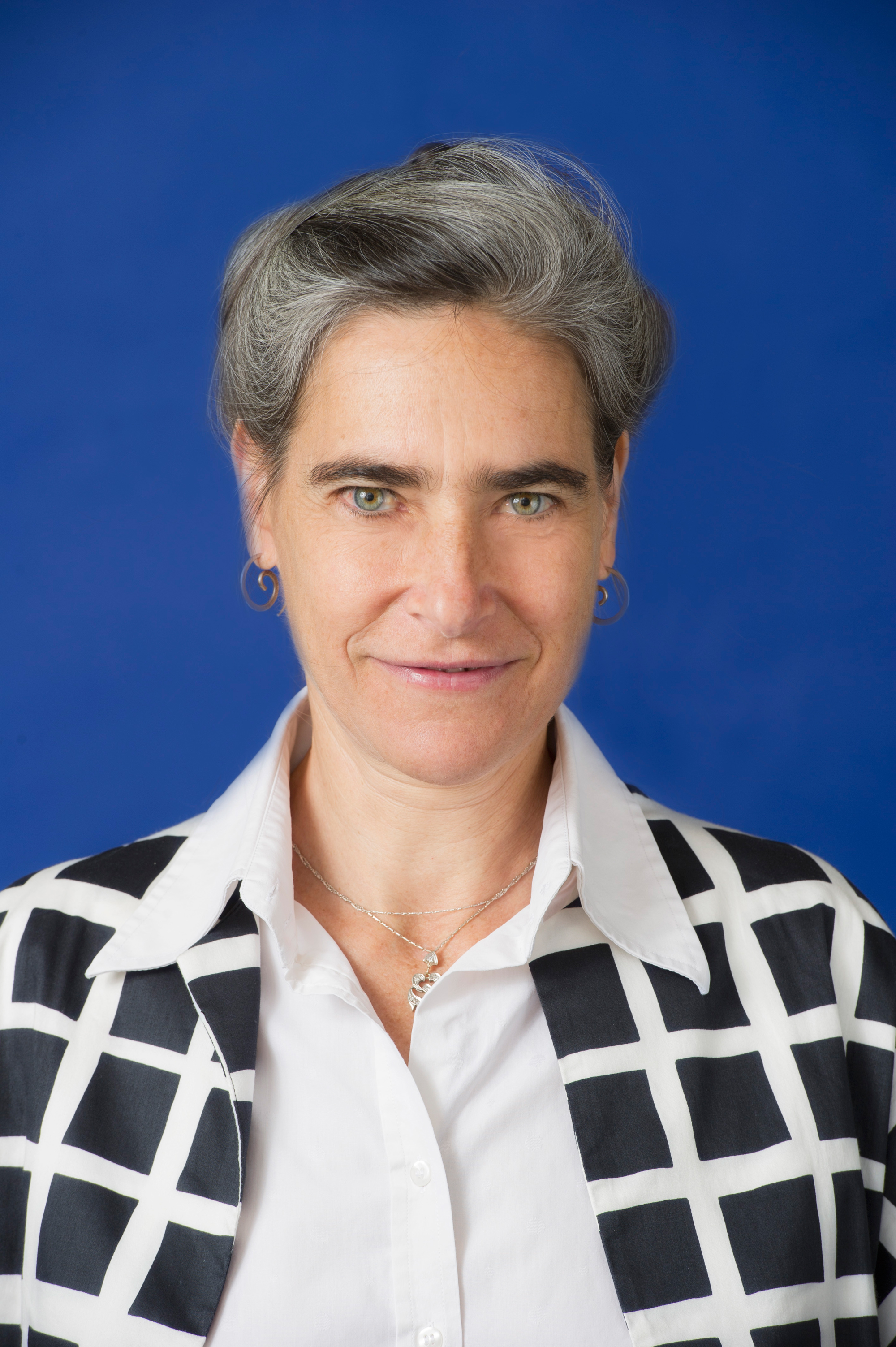
Sarah Chayes, who lived in and studied the world’s most corrupt nations, warns that the U.S. is walking the same path. In this episode of The World Unpacked, Sarah tells host Jon Bateman why systemic corruption looks nothing like how we picture it, how anti-corruption advocates are co-opted as enablers, and what to say if someone asks you for a bribe.
Jon Bateman, Sarah Chayes